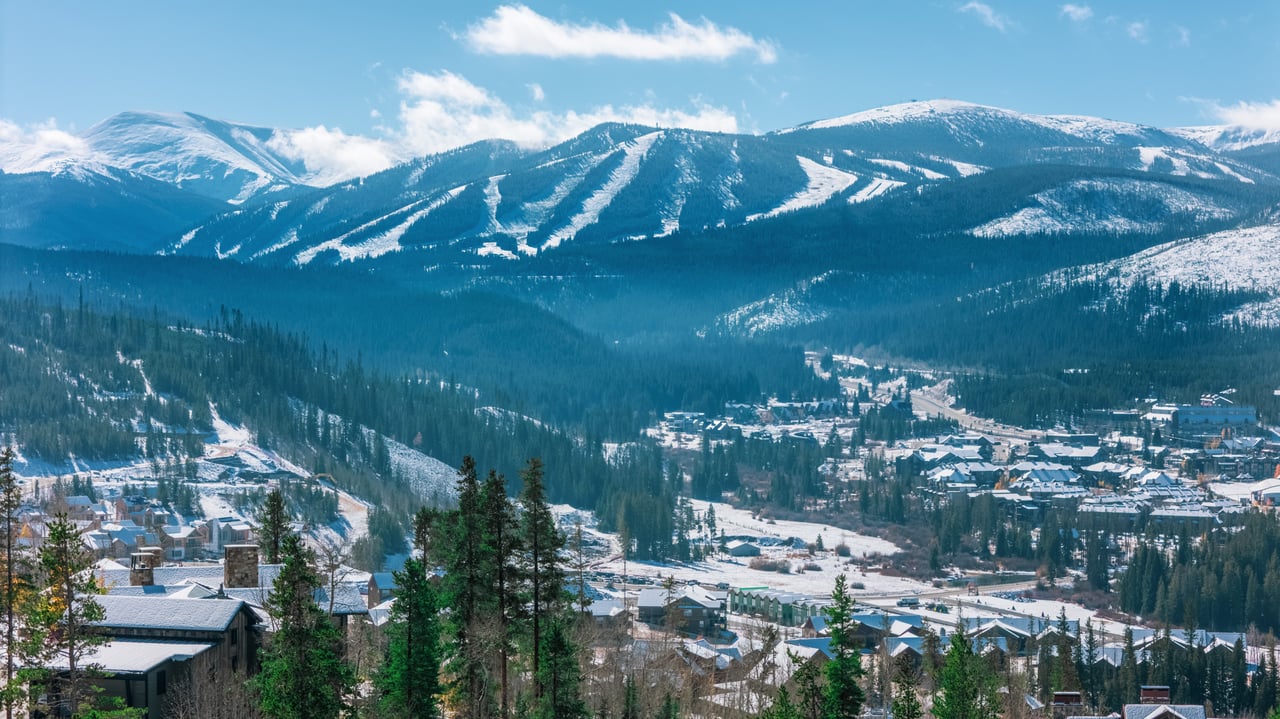
Winter Park may be home to one of Colorado's largest and best-known ski resorts, but here's a statistic that surprises many visitors and prospective homebuyers:
At the 2020 Census, the Town of Winter Park had just 1,033 permanent residents.
That's not a typo.
Compare that with other well-known Colorado ski towns:
Colorado Ski Town | 2020 Population |
|---|---|
Steamboat Springs | 13,224 |
Aspen | 7,004 |
Breckenridge | 5,078 |
Vail | 4,835 |
Telluride | 2,607 |
Fraser | 1,400 |
Winter Park | 1,033 |
Winter Park's population was just a fraction of those of Steamboat Springs, Aspen or Breckenridge, despite Winter Park Resort being one of Colorado's major destination ski areas.
But looking only at Winter Park's town limits doesn't tell the whole story.
How Many People Live in Grand County, Colorado?
Winter Park is part of Grand County, along with Fraser, Granby, Tabernash, Grand Lake, Hot Sulphur Springs, Kremmling and numerous unincorporated mountain communities.
The U.S. Census Bureau estimates Grand County's population at 16,496 residents as of July 1, 2025, up from a 2020 population base of approximately 15,714.
That represents roughly 5% population growth from 2020 to 2025.
And this is where the comparison gets particularly interesting.
Grand County vs. Other Colorado Ski Counties
Some of Colorado's most recognizable ski destinations are located in counties that are considerably more populated than Grand County.
According to the Census Bureau's 2025 population estimates:
Colorado Resort County | Major Ski Areas | 2025 Population | Change Since 2020 |
|---|---|---|---|
Eagle County | Vail, Beaver Creek | 54,291 | -2.6% |
Summit County | Breckenridge, Keystone, Copper Mountain | 31,517 | +0.7% |
Routt County | Steamboat Springs | 25,329 | +2.0% |
Grand County | Winter Park, Granby Ranch | 16,496 | +5.0% |
Grand County remains substantially smaller than Summit, Eagle and Routt counties, but its recent population growth rate has been higher than all three.
That's an important distinction for anyone trying to understand where Winter Park and Grand County sit within Colorado's mountain real estate landscape.
Why Does Winter Park Feel Much Bigger Than a Town of 1,000 People?
Spend a holiday weekend in Winter Park and a population of roughly 1,000 permanent residents can sound almost impossible.
There are a few reasons.
First, Census population numbers measure permanent residents, not the total number of people occupying homes, hotels, condos and vacation rentals on any given weekend.
Winter Park has an unusually large amount of housing relative to its permanent population. At the 2020 Census, the town had more than 2,700 housing units despite having only 1,033 permanent residents.
Many properties in Winter Park and throughout the Fraser Valley are second homes, vacation properties or short-term rentals. During ski weekends, holidays, summer festivals and peak vacation periods, the number of people physically staying in the area can therefore be far greater than the official year-round population.
Second, what visitors think of as the "Winter Park area" is much larger than the municipal boundaries of Winter Park itself.
Winter Park and neighboring Fraser essentially function as one connected mountain community for many residents and visitors. Fraser alone had another 1,400 permanent residents at the 2020 Census.
Continue north through Tabernash and Granby and you begin to see why looking at Grand County as a whole often gives homebuyers a better picture of this market than looking solely at the Town of Winter Park.
Winter Park vs. Breckenridge
Breckenridge is probably one of the most useful comparisons.
Breckenridge had 5,078 residents in 2020, nearly five times Winter Park's population of 1,033.
At the county level, the difference is also significant.
Summit County's estimated 2025 population is approximately 31,517, compared with 16,496 in Grand County. In other words, Summit County has close to twice the permanent population of Grand County.
Yet Grand County has actually experienced the stronger percentage population growth since 2020: approximately 5% versus 0.7% for Summit County.
For buyers comparing Winter Park vs. Breckenridge real estate, this difference helps explain why the two markets can feel very different even though both are major ski destinations within driving distance of Denver.
Winter Park vs. Vail
The Town of Vail had 4,835 permanent residents in 2020, more than four times Winter Park's population.
Eagle County, which includes Vail and Beaver Creek, is considerably larger still. Its estimated 2025 population of 54,291 is more than three times that of Grand County.
That larger resident base is one reason the Vail Valley has developed into a much more extensive mountain corridor, with communities stretching through Vail, Avon, Edwards, Eagle and Gypsum.
Winter Park and the Fraser Valley remain much smaller by comparison.
Winter Park vs. Steamboat Springs
Steamboat Springs is another interesting comparison because both markets offer major destination ski resorts combined with year-round mountain communities.
But Steamboat itself is much larger.
Its population was 13,224 in 2020, compared with Winter Park's 1,033.
Routt County's estimated population reached approximately 25,329 in 2025, versus Grand County's 16,496.
Even here, however, Grand County's recent percentage growth has been stronger: approximately 5% since 2020 compared with 2% in Routt County.
Is Grand County Growing?
Yes — and that may be the most important number in this entire comparison.
The Census Bureau estimates Grand County grew from a population base of approximately 15,714 in 2020 to 16,496 in 2025, an increase of about 5%.
Compare that with:
- Grand County: +5.0%
- Routt County: +2.0%
- Summit County: +0.7%
- Eagle County: -2.6%
Population growth doesn't automatically translate into rising real estate values, and mountain housing markets are affected by everything from interest rates and inventory to second-home demand and short-term-rental regulations.
But it does tell us something important: Grand County is not simply a tiny resort community frozen in time. Its permanent population is growing.
And that growth is happening while the county remains substantially less populated than several of Colorado's other major resort regions.
A Small Population With a Major Ski Resort
Perhaps the most remarkable thing about Winter Park is the contrast between its size and its amenities.
This is a town that had barely more than 1,000 permanent residents at the 2020 Census, yet it sits beside a nationally recognized ski resort and serves as the center of a much larger year-round recreation economy.
That's very different from places like Steamboat Springs or Aspen, which function as larger standalone cities in addition to being resort destinations.
Winter Park is more accurately understood as one piece of the larger Fraser Valley and Grand County real estate market.
Someone considering moving to the area might live in Winter Park, Fraser, Tabernash, Granby or another nearby community while still skiing Winter Park Resort, dining in downtown Winter Park and participating in the same local economy.
What Does This Mean for Winter Park Real Estate?
For buyers researching Winter Park, Colorado real estate, the population numbers help explain something that isn't always obvious from a weekend visit.
Winter Park is still a remarkably small mountain community.
Grand County had an estimated 16,496 permanent residents in 2025 — roughly half the population of Summit County and less than one-third that of Eagle County.
At the same time, Grand County is growing, and Winter Park continues to attract second-home owners, investors, remote workers and full-time residents who want access to Colorado's mountain lifestyle.
That combination — a major ski destination located within a relatively small permanent community — is one of the characteristics that makes the Winter Park area different from many of Colorado's more established resort markets.
If you're comparing Winter Park, Fraser or Grand County to Breckenridge, Vail, Aspen or Steamboat Springs, don't just compare ski terrain or home prices.
Population tells another part of the story.
And in Grand County, that story is still being written.